Volume I · Bttr. Field Guides

Est. 2026 · Updated weekly

Bttr.

Field
Guides.

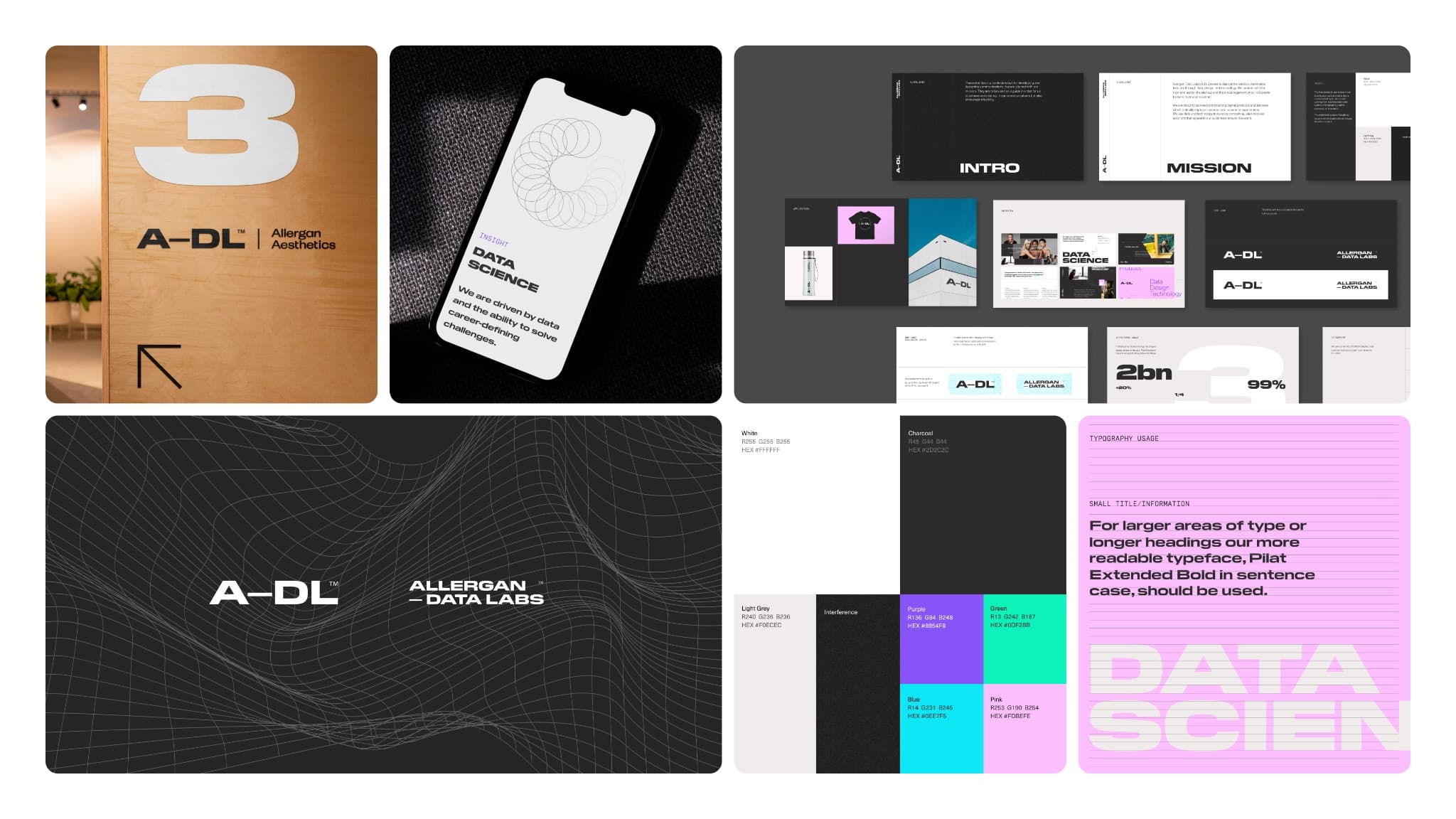
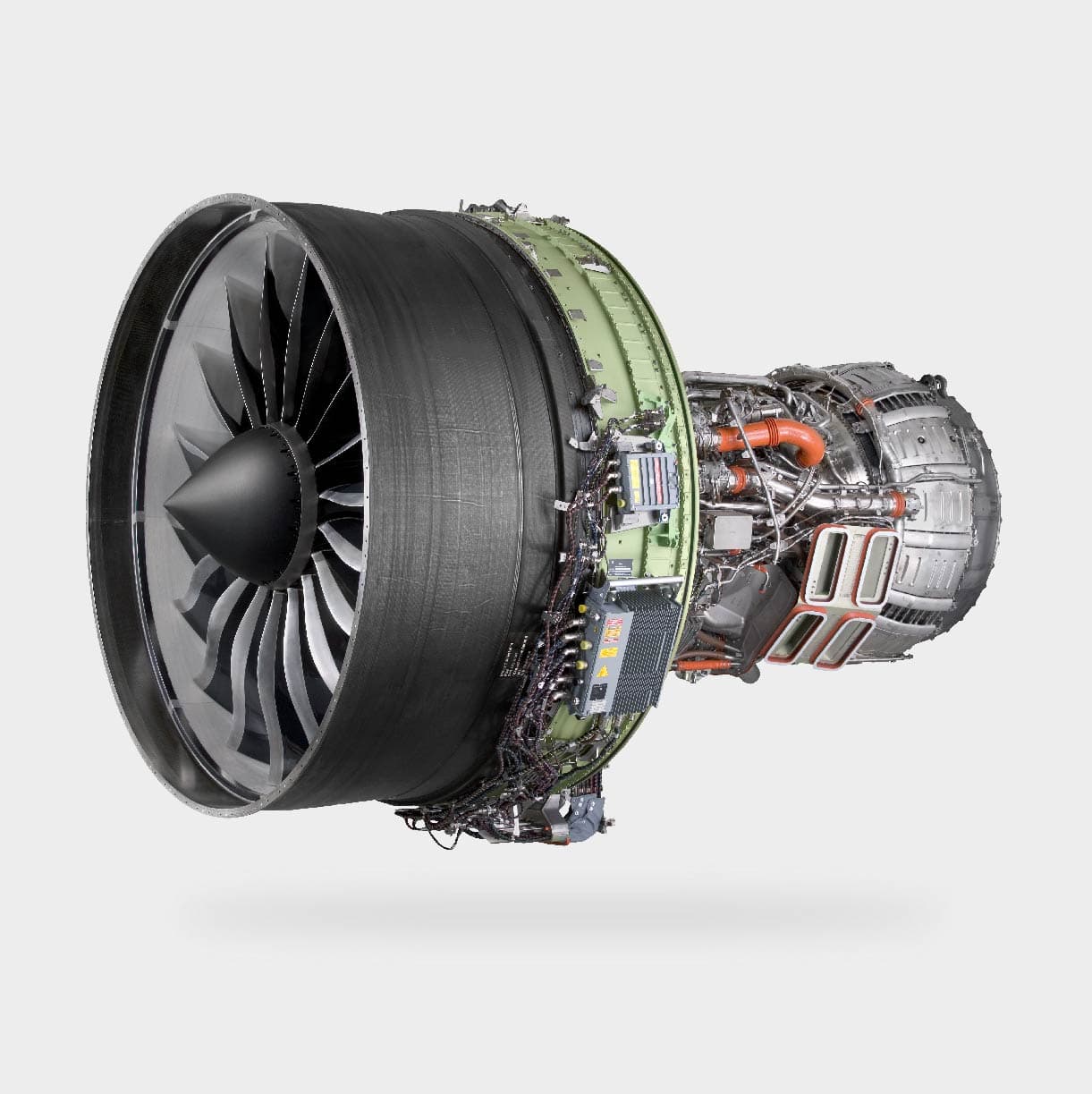
The canonical knowledge layer for AI native enterprise systems. Definitional pillars, named frameworks, live benchmarks, and field reports · built from real engagements at GE Aerospace, Allergan Aesthetics, Tiger BioSciences, GE Vernova, and Ross J Barr.

Written for senior buyers · No filler · Cite as you wish

87

Field guides

4

Topical clusters

1

Live benchmark

Weekly

Cadence

Browse by cluster

Four clusters. One canonical knowledge layer.

Every field guide on this page belongs to one of four topical clusters. Each cluster has a definitional pillar, supporting pages, comparisons, and (where it applies) a named framework.

AI Search Visibility

15 pages

How AI engines cite brands.

The AI Visibility Stack, the Citation Index, the Brand AI Scanner, four per engine deep dives, GEO vs SEO, six industry pillars.

Brand Operating Systems

9 pages

How modern brands operate at scale.

The Brand Operating System Framework, the definitional pillar, comparison and implementation guides, plus the 30 item checklist.

Industry & Regulated

9 pages

AI Visibility and software, per vertical.

AI Visibility for Aerospace, Biotech, Medical Devices, Healthcare, Energy, and the regulated umbrella · plus the matching software-development field guides.

POV & Frontier

4 pages

Where the work is going.

Long form essays on AI native operations, regulated product UX, the AI infrastructure buildout, and the shifts that change the work.

What Is Google AI Mode
Latest

October 16, 2026 · 8 min read

What Is Google AI Mode

Google AI Mode is Google’s conversational AI search experience, where a custom version of Gemini answers a question directly instead of returning a ranked list. Its method is query fan-out: at Google I/O 2025, Head of Search Elizabeth Reid described how Search breaks a question into subtopics and issues a multitude of searches at once against the live index, then writes one synthesized, cited answer. By May 2026 Google said AI Mode had surpassed one billion monthly users, made Gemini 3.5 Flash its default model, and began generating the page itself with interactive visuals, tables, graphs or simulations built in real time. The operator shift is plain. When one question becomes a dozen searches, ranking first for the head term is not the win. Being the source that keeps surfacing across the subtopics is.

AIStrategyBrand

87 insights

How to Evaluate a RAG System

October 14, 2026 · 8 min read

How to Evaluate a RAG System

Evaluating a RAG system means scoring its two stages on their own, because a retrieval augmented generation answer is only as good as the passages behind it, and a wrong answer has two possible causes a single number cannot tell apart. Retrieval is measured before the model writes anything. The LlamaIndex evaluation guide scores a retriever with hit rate, the share of questions where the right passage lands in the top results, and mean reciprocal rank, which rewards ranking it high. Generation is measured given what was retrieved. Ragas, the open evaluation toolkit now maintained by VibrantLabs, splits the answer into claims and scores faithfulness as the share the retrieved context supports, then scores answer relevance by generating questions from the answer and comparing them to the real one. Read as two pairs, the four metrics locate the fault: high recall with low faithfulness is a generation problem, low recall with high faithfulness is a retrieval one. Anthropic showed the payoff in September 2024, cutting a retrieval failure rate measured by recall at 20 from 5.7 percent to 1.9 percent by adding context, keyword search, and reranking. And it is not a one time check. Models drift, documents go stale, so the teams that trust their systems run these scores on live traffic the way they run unit tests.

AIEngineeringStrategy
What Is a Reasoning Model

October 12, 2026 · 8 min read

What Is a Reasoning Model

A reasoning model is a large language model trained to work through a problem in steps before it answers, rather than reply in one pass. It spends extra computation at the moment you ask, called test-time compute, to write out a chain of thought and check its own work. Anthropic describes its extended thinking as letting the very same model give itself more time and effort rather than switching to a separate model, and reported that Claude 3.7 Sonnet reached 84.8% on the hard GPQA science set, with a 96.5% physics subscore, using parallel sampling at a 64K token thinking budget. The habit is trained, mostly by reward. DeepSeek showed in January 2025 that its R1 Zero model learned to reason purely through reinforcement learning with no supervised fine-tuning first, developing self checking and long chains of thought on its own, and shipped DeepSeek R1 under the MIT license at performance comparable to OpenAI o1. The cost is real, so the newest models add a dial. Claude Opus 4.5 hit its best score on SWE-bench Verified using 76% fewer output tokens at a medium effort. The skill is matching how hard the model thinks to how hard the task is.

AIEngineeringStrategy
What Is Fine-Tuning

October 10, 2026 · 8 min read

What Is Fine-Tuning

Fine-tuning is training a pre-trained model further on your own labeled examples so a behavior is set into its weights. It changes how a model acts, its tone, its format, its grip on a narrow task, rather than what facts it knows. Google frames the move as taking a general-purpose model and adapting it to your domain on a curated dataset of your own examples. The gains are measurable. When Anthropic opened fine-tuning for Claude 3 Haiku in Amazon Bedrock, a team fine-tuned it to moderate comments and lifted classification accuracy from 81.5% to 99.6% while cutting tokens per query by 85%. Lighter methods such as LoRA keep the base model frozen and train a small set of new weights beside it. The order that saves money is a plain prompt first, retrieval when the model lacks facts, fine-tuning only when it lacks the right behavior. A fact that changes is a retrieval problem. A behavior that drifts is a training problem.

AIEngineeringStrategy
What Is Hybrid Search

October 8, 2026 · 8 min read

What Is Hybrid Search

Pure vector search was supposed to make keyword search obsolete. In production it did not, because each one is blind where the other sees. A vector search matches meaning, so it finds get my money back for a question about a refund, but Anthropic notes it can miss an exact string like the error code TS-999. BM25 keyword search is the reverse, precise on codes, SKUs, and proper names, blind to phrasing. Hybrid search runs both and fuses the two ranked lists into one. The hard part is the merge, because a cosine distance and a BM25 relevance score live in different units, so adding them is meaningless. Reciprocal Rank Fusion solves it by combining on rank position rather than raw score, with one constant usually set to 60, so a document both retrievers liked rises to the top and one only a single retriever found still earns its place. Microsoft, Google Cloud, and Anthropic all ship the keyword side next to the vector side, not instead of it.

AIEngineeringStrategy
What Is a Knowledge Graph

October 6, 2026 · 8 min read

What Is a Knowledge Graph

A knowledge graph stores facts and how they connect. Real world things, people, places, products, concepts, become entities, and the links between them, founded by, located in, reports to, become named relationships you can query rather than infer. The unit is the triple, subject, predicate, object, the shape the W3C standardized as RDF. Google made the idea famous when it launched the Knowledge Graph on May 16, 2012 with 500 million objects and 3.5 billion facts, framing the shift as things, not strings. The reason it is back is GraphRAG. Microsoft Research showed that vector retrieval struggles to connect the dots across documents and to answer questions about a whole corpus, and a graph follows the links instead. When the answer sits in one passage, use a vector index. When it lives in the connections between facts, use the graph.

AIEngineeringStrategy
RAG vs Fine-Tuning

October 4, 2026 · 9 min read

RAG vs Fine-Tuning

The teams that waste the most on AI pick RAG or fine-tuning before they name the problem. The two are not answers to the same question. RAG gives a model facts it can look up at answer time, retrieved from your own documents, cut into chunks, turned into embeddings, and searched by meaning. The fact never enters the weights. Anthropic notes that once a knowledge base passes roughly 200,000 tokens, retrieval is what lets a model draw on a corpus no prompt could hold. Fine-tuning does the opposite. It trains the base model on your examples until a tone, a format, or a task is set into the weights, which the OpenAI Cookbook notes can take thousands of worked examples and suits teaching a skill rather than a fact. The clean rule is RAG for facts, fine-tuning for behavior, and in production usually both. The Cookbook frames it as an exam: fine-tuning is studying a week ahead and risking a forgotten detail, RAG is the open notes exam with the answer in front of the model while it works. Freshness, cost, and the paper trail settle the rest. A fact that changes is a retrieval problem. A behavior that drifts is a training problem. Name the problem first and the tool picks itself.

AIEngineeringStrategy
What Is Reranking

October 2, 2026 · 8 min read

What Is Reranking

A retrieval system usually finds the right passage and then leaves it in the wrong place. The first stage is a bi encoder that turns the query and every document into separate vectors and compares them, which is fast but never reads the two together, so the best passage often lands in the middle of the list. Reranking is the second pass that fixes the order. A cross encoder reads the query and one candidate as a single input, scores how they actually relate, and reorders the short list so the most relevant passages rise to the top. It is slower because it computes a fresh score for every query and document pair, so it runs on about a hundred candidates, never the whole corpus. On the public MS MARCO benchmark the sentence transformers cross encoder models trade speed for accuracy across sizes, from a tiny model near 9,000 documents a second to larger ones a fraction of that. Anthropic measured the payoff on a real pipeline: retrieve 150 chunks, rerank, keep the top 20, and the failure rate fell 67%. Retrieval finds the passage. Reranking makes sure the model reads it first.

AIEngineeringStrategy
What Is Chunking in RAG

September 30, 2026 · 8 min read

What Is Chunking in RAG

A retrieval system never reads your whole document. It reads the passages you cut it into, and chunking is that cut. Split too coarse and one chunk carries three ideas, so its embedding blurs and the right query misses. Split too fine and a passage loses the context that made it mean anything, the way a line reading the company revenue grew by 3% no longer says which company or which quarter. There is no universal size. LangChain base text splitter defaults to 4,000 characters, LlamaIndex sentence splitter to 1,024 tokens, because the right cut depends on your documents and your queries. Anthropic reported that adding a short generated context to each chunk before embedding cut the failure rate for the top 20 retrieved chunks by 35%, and by 67% once reranking was stacked on top. Retrieval quality does not start at the model. It starts at the cut.

AIEngineeringStrategy
What Is Semantic Search

September 28, 2026 · 8 min read

What Is Semantic Search

A search box that matches words cannot tell that refund and get my money back mean the same thing, because the two share no letters. Semantic search closes that gap. It turns every document and every query into an embedding, a list of numbers that places meaning at a point in a large space and puts similar meanings nearby, then returns the documents whose points sit closest, measured by cosine similarity, the angle between two vectors on a scale from minus one to one. The idea runs from word2vec in 2013 through Sentence BERT in 2019, and Google folded it into Search in October 2019 to better understand one in ten queries. Across billions of vectors it stays fast through approximate nearest neighbor search, most often the hierarchical navigable small world graph. It does not replace keyword search, it joins it, and the pairing most teams ship is hybrid search.

AIEngineeringStrategy
What Is Spec-Driven Development

September 26, 2026 · 8 min read

What Is Spec-Driven Development

A model writes plausible code from a loose prompt in seconds, then the code drifts from what you meant because the only record of intent was a chat that scrolled away. Spec-driven development is the discipline that grew up around that failure. You write a precise specification first, and you treat the code as something the spec generates rather than the thing you argue about. GitHub frames its Spec Kit toolkit around one line, define what and why before deciding how to build it, and states the inversion plainly: specifications do not serve code, code serves specifications. The workflow is four moves, specify, plan, tasks, implement, with the spec kept as a plain file in the repo rather than a throwaway chat. OpenSpec keeps its specs in Markdown and reports working with more than thirty AI assistants, and Amazon Kiro writes requirements in EARS notation so every line is one condition and one behavior a machine can test. Review moves to the small artifact. You read a page instead of a pull request.

AIEngineeringStrategy
What Are Agent Skills

September 24, 2026 · 7 min read

What Are Agent Skills

An agent is capable but it does not remember how you work, so every conversation starts by re-explaining the same rules. Agent Skills close that gap. A skill is a folder with one required file, SKILL.md, that carries a name, a description, and the steps written in Markdown, plus optional scripts and reference files the agent opens only when a task calls for them. Anthropic published the format on October 16, 2025 and released it as an open standard for cross platform portability on December 18. The design runs on progressive disclosure: names and descriptions cost about a hundred tokens at startup, the instructions load only when triggered, and bundled files stay on disk until used. The shift for operators is where capability lives. The prompt sat in someone’s head. The skill sits in version control, reviewed and shared like a function.

AIEngineeringOperations
What Are Embeddings

September 22, 2026 · 7 min read

What Are Embeddings

A computer cannot read. It matches characters, so refund and get my money back look like strangers even though they mean the same thing. An embedding closes that gap. It turns a piece of text into a list of numbers that places its meaning at a single point in a large space, and puts text that means something similar nearby. OpenAI’s text-embedding-3-small returns 1,536 numbers per input and its larger model returns 3,072, and no one sets them by hand. The idea is older than the chatbot: Google published word2vec in 2013 and Stanford followed with GloVe in 2014, both trained on raw text with nothing labeled. Once meaning is a location, closeness becomes a number you can compute with cosine similarity, and that one move is the layer under semantic search, retrieval augmented generation, and recommendations. A token is not an embedding. Tokenizing tells you which pieces you have, embedding tells you what they mean.

AIEngineeringStrategy
What Is a Vector Database

September 20, 2026 · 8 min read

What Is a Vector Database

A relational database finds a row by matching it exactly. That breaks the moment the match is about meaning, because a refund article and a customer asking to get their money back share almost no words. A vector database closes that gap. It stores each document as an embedding, a list of numbers that places its meaning at a point in space, and answers a query by returning the records whose points sit closest, measured by cosine similarity, Euclidean distance, or dot product. To stay fast across billions of vectors it searches for the approximate nearest neighbor rather than the exact one, most often through the hierarchical navigable small world graph introduced by Malkov and Yashunin in 2016. This is the infrastructure under retrieval augmented generation and agent memory, and for most teams in 2026 pgvector on the Postgres they already run is the honest place to start.

AIEngineeringStrategy
How to Choose an AI Agent Framework

September 16, 2026 · 8 min read

How to Choose an AI Agent Framework

A year ago the framework you picked barely mattered. Every demo was one agent calling a few tools, and you could rewrite it in an afternoon. That is over. As teams move from demos to production, the framework decides how the agent holds state, where a person can step in, and what you can see when it fails, and rewriting it becomes a quarter, not an afternoon. Five names carry most of the weight right now: LangGraph, a low level framework for long running stateful agents; CrewAI, a standalone framework for role based crews; the OpenAI Agents SDK, released March 2025 as the successor to the experimental Swarm and provider agnostic across 100 plus models; Google ADK, a code first toolkit for teams inside Google Cloud; and the Microsoft Agent Framework, which folded AutoGen and Semantic Kernel into one path at its October 1, 2025 preview and sent both predecessors to maintenance mode. Which is best is the wrong question. The four traits that separate a demo from a system, and how to pick the one you can leave.

AIEngineeringStrategy
What Is Entity SEO

September 14, 2026 · 8 min read

What Is Entity SEO

Search engines stopped matching words and started recognizing things. When Google launched the Knowledge Graph on May 16, 2012, Amit Singhal described the shift in three words: things, not strings. That graph now holds more than 1.6 trillion facts about 54 billion entities, up from 500 million entities at launch, and it is what AI Overviews, Gemini, and every answer engine reach into before they cite anyone. In June 2025 Google pruned it, cutting more than three billion entities in a week to make it leaner and more trusted. Entity SEO is the work of becoming a thing that graph is sure of, because a model cannot cite a brand it cannot place. What an entity is, the signals that build one, and why you get confirmed in rather than write your way in.

AIStrategyBrand
What Is Context Rot

September 12, 2026 · 8 min read

What Is Context Rot

A model with a million token window still does not read it evenly. It handles the front and the back with care and grows careless in the middle, and the more you load in, the wider that careless zone gets. That is context rot, the measurable drop in quality as the input grows, and it starts long before the window is full. In a July 2025 report, Chroma tested 18 current models, among them GPT 4.1, Claude 4, Gemini 2.5, and Qwen3, and found every one got worse as the input got longer, even on finding a fact or copying text. Two years earlier a Stanford team named the lost in the middle effect, where accuracy fell more than 30 percent when the answer sat in the middle rather than the edges. What context rot is, why a bigger window is not a bigger memory, and the smaller cleaner window that fixes it.

AIEngineeringStrategy

Bttr. Field Brief

The brief Bttr. writes for senior buyers.

Monthly. One field guide worth your time on Brand Operating Systems, AI search visibility, and the infrastructure buildout. Written by Donny Smith. No filler.

Industries We Serve

Aerospace & DefenseBiotechnologyMedical & HealthcareManufacturingFinancial ServicesConsumer ProductsEnterprise Software

New Business

Start a project

Headquarters

North America

© 2026 Bttr. All rights reserved.